How to Sleep in Your Car
CAR CAMPING • ROAD-TRIP SAFETY
Sleeping in your car can help you rest well on a long road trip. However, you must pick a legal parking spot and keep your car safe. The smartest plan is simple: choose the legal stop first, then make the car comfortable with your bed or seats.
Road Blueprint | Know Your Way Around. But believe me , Sleeping anywhere you like with your feet propped up as shown below in the image will get you a knock on the window from a low enforcement telling you to move.
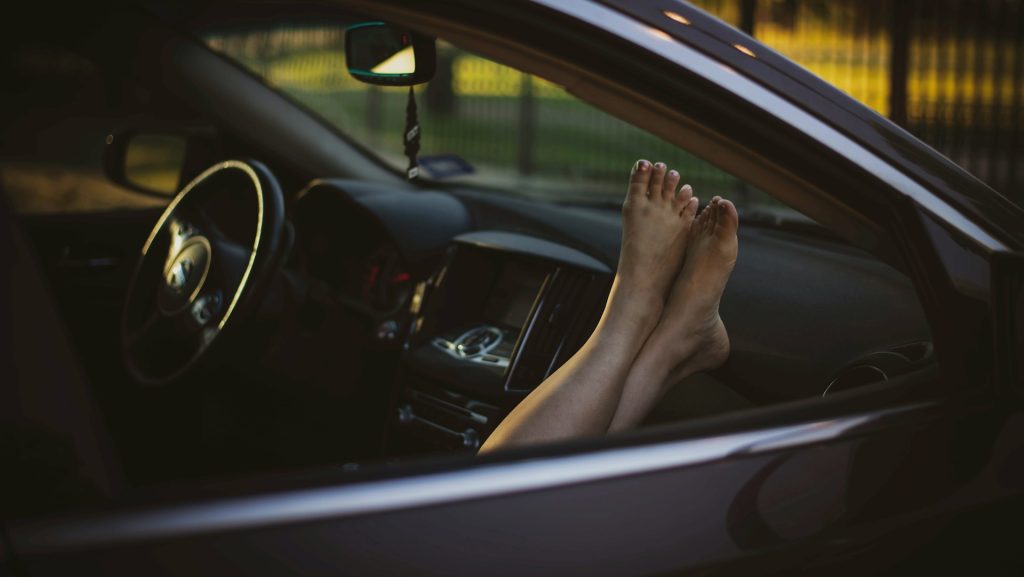
The question is not really whether you can sleep in a car. The bigger question is whether you can do it without turning a tiring road trip into a parking violation, a carbon-monoxide exposure, a heat problem or a bad night in the wrong place.
This guide is written for U.S. road trips because overnight parking and camping rules are controlled by different agencies, states, parks and local governments. There is no single nationwide rule that makes every parking lot, rest area, trailhead or roadside pull-off legal for sleeping.
Can You Sleep in Your Car on a Road Trip?
Yes; provided the location allows overnight vehicle occupancy or camping, and you can remain there without violating posted rules, local law or the land manager’s conditions. The legal answer changes from place to place. For example, the National Park Service says sleeping in a vehicle is allowed at a lawfully occupied designated campsite at North Cascades National Park, while Congaree National Park prohibits sleeping overnight in vehicles anywhere in the park, including its frontcountry campgrounds.
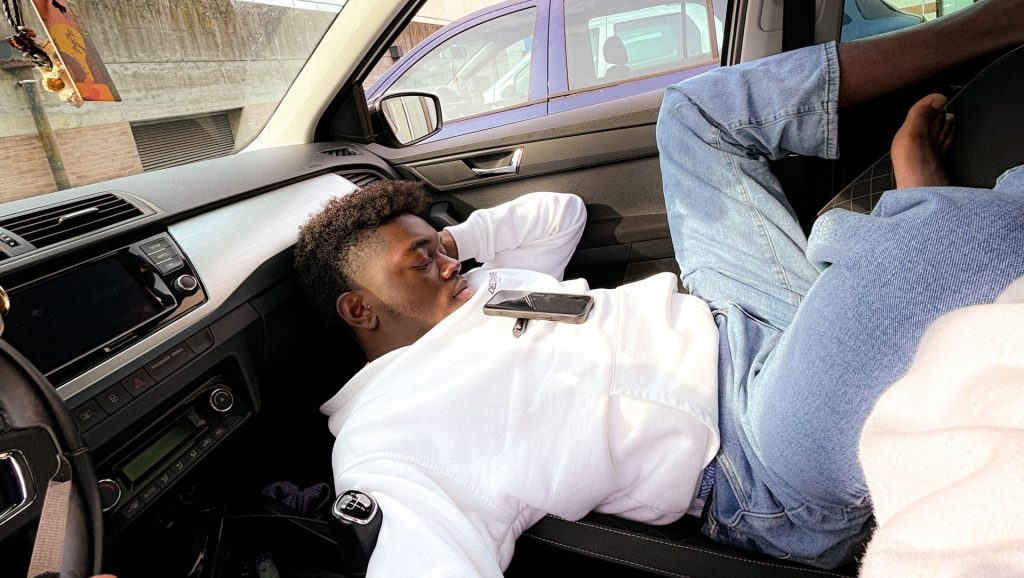
That difference is exactly why “there is a parking lot, so I can sleep there” is not a safe rule to follow. Parking permission and overnight sleeping permission are not automatically the same thing. Check the exact facility, agency or municipality before you turn the key off for the night.
The Legal Rule: Check the Place, Not Just the Parking Sign
U.S. overnight vehicle rules vary by location. First, identify who manages the land; such as a state agency, national park, BLM office, local government, or private owner, and check their specific rules.
1. Designated Campground
Designated campgrounds are built for overnight stays, but vehicle-sleeping rules vary by location. Always check whether sleeping in your car at a campsite is permitted.
Do: reserve or register when required, use the assigned site, obey quiet hours and store food according to local wildlife rules.
2. BLM Dispersed Camping
Many Bureau of Land Management areas allow dispersed camping away from developed facilities, but the BLM says rules vary by state, local area and field office. Posted closures, stay limits, road restrictions, fire rules and sensitive-resource protections still apply.
Do: verify the local BLM office rules and use only roads and camping areas that the local rules allow.
3. Official Rest Area
A rest area can be an appropriate place to stop when fatigue is the problem, but resting is not the same as having permission to establish an overnight camp. California’s current transportation guidance includes rest areas for naps and safety breaks, while California rules also prohibit camping at safety roadside rest areas and impose a time limit. Oregon’s official rest-area rules similarly prohibit camping and limit a vehicle’s stay to 12 hours in a 24-hour period.
Do: read the sign and the state transportation agency’s current rules for that facility.
4. Private Property With Permission
A private lot, farm, campground, driveway or business property can be a legal option when the owner or operator expressly permits overnight parking. Do not treat a quiet lot as an invitation.
Do: ask before settling in, follow the owner’s conditions, and leave immediately if the permission does not cover sleeping in the vehicle.
5. Street, Trailhead, Beach Lot or Scenic Pull-Off
This is the category where assumptions cause the most trouble. A place may be open at 10 p.m. and still prohibit overnight parking, camping or sleeping in a vehicle. National parks provide a strong example: North Cascades prohibits vehicle sleeping outside designated campsites, and Haleakalā National Park says sleeping in a vehicle is allowed only at a campsite registered to the visitor or a member of the group. Congaree goes further and prohibits vehicle sleeping everywhere in the park.
RoadBlueprint rule: never use “other cars are doing it” as your legal test.
The 60-Second Legal Check Before You Park
Where Is It Usually Easier to Sleep in a Car Legally?
The most predictable options are places specifically designed for overnight use or places where the managing authority clearly allows vehicle camping. A designated campground is often the simplest choice. On suitable BLM public land, dispersed camping can also work. Rest areas are useful for fatigue management, but their rules may limit the length of stay or prohibit camping altogether.
In other words, look for an overnight-use designation rather than searching for the least monitored parking lot. That approach is better for both legality and personal safety.
How to Make a Car Comfortable Enough for Real Sleep
You do not need a van conversion. You need a flat-ish sleeping surface, insulation from the seat or floor, enough room to change position, and a way to keep essential items close without blocking your exit.
Build the Bed Before You Are Exhausted
For an SUV or hatchback, fold the rear seats and test your sleeping position while you are still parked safely during daylight. In a sedan, the back seat may work for a short nap, while a larger sleeping surface may require a more creative arrangement. The key is not luxury; it is avoiding a cramped position that leaves you waking every hour.
- Use a sleeping pad, folded blanket or other cushioning layer to smooth hard seat contours.
- Choose a sleeping bag or blankets for the actual nighttime temperature, not the daytime temperature.
- Keep a small pillow or soft clothing bundle to support your head and reduce pressure points.
- Move loose gear away from the sleeping surface so it cannot become a tripping hazard.
- Keep at least one exit path clear.
Use Privacy Without Turning the Car Into a Sealed Box
Window shades, dark fabric panels and purpose-made vehicle curtains can make a major difference to sleep quality. They also reduce the temptation to keep checking outside every few minutes. But privacy does not make a location legal, and it should never be treated as a substitute for safe ventilation or weather planning.
Keep Your Essentials Where Your Hand Can Find Them
Put your phone, water, keys, flashlight or headlamp, basic first-aid supplies and any required medication within easy reach. Charge your phone before sleeping. Keep important documents and valuables secured rather than scattered across the cabin where they are easy to see from outside.
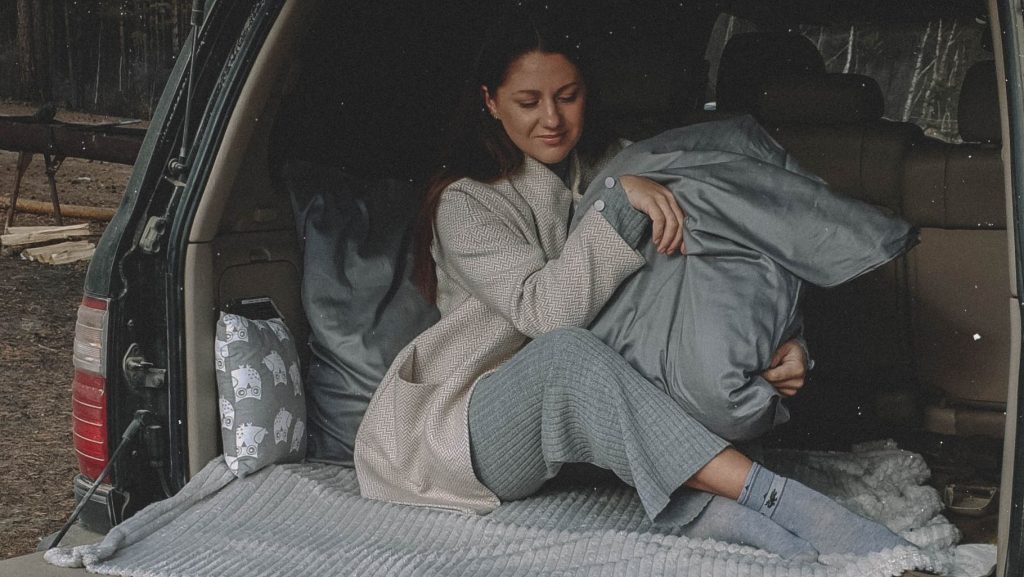
How to Sleep in Your Car Safely: The Rules I Would Not Bend
1. Do Not Sleep With the Engine Running for Climate Control
This is one of the most important safety rules in the whole guide. The CDC warns that a small leak in a vehicle’s exhaust system can allow carbon monoxide (CO) to build up inside the car. Carbon monoxide is colorless and odorless. For that reason, using the engine as an all-night heater or air conditioner is not a sound sleep strategy.
Never run a vehicle inside an attached garage. If snow is present, also check that the tailpipe is completely clear before starting the vehicle: CDC guidance warns that a blocked tailpipe can allow CO to build up quickly inside the vehicle.
2. Treat Heat as a Reason to Find Another Place to Sleep
A parked vehicle can become dangerously hot. NHTSA warns that cracking windows or parking in shade does little to protect a child from a hot vehicle, and CDC guidance notes that vehicle temperatures can rise rapidly. For overnight car sleeping, the practical rule is straightforward: if you cannot keep the cabin at a safe temperature without relying on a running engine, choose a different sleeping arrangement.
3. Never Use Combustion Gear Inside the Car
Do not cook with a gas stove inside the vehicle. Do not use charcoal. Do not bring a fuel-burning heater into the cabin. CDC guidance specifically warns against using portable gas camp stoves indoors and against burning charcoal indoors because both can produce carbon monoxide.
4. Park So You Can Leave Without a Puzzle
Choose a lawful parking position with a clear path out. Avoid blocking access lanes, fire lanes, gates or other vehicles. Do not wedge gear between you and the door. If the site feels unsafe, exposed or uncomfortable after dark, move before going to sleep rather than convincing yourself to “make it work.”
5. In Bear Country, Sleeping in the Car Does Not Replace Food-Storage Rules
Wildlife rules vary by park. The National Park Service notes that food-storage requirements can include lockers or hard-sided vehicles, and some parks treat wrappers, drinks, toiletries and other scented items as attractants. In Yosemite, for example, food and scented items have specific nighttime storage requirements and bears can break into vehicles.
Before bedtime, check the exact park’s food-storage rule. Never assume a closed car is automatically an approved bear-resistant container.
6. Do Not Let Fatigue Push You Onto the Shoulder
NHTSA’s drowsy-driving guidance is blunt about the danger of driving tired. If sleepiness is winning, getting off the road into a safe location to rest is the correct priority. A legal rest area or other permitted stop is far better than forcing another hour behind the wheel simply because you promised yourself you would reach the next town.
Sleeping in the Car With Children or Pets
Children and pets make temperature control more important, not less. CDC and NHTSA guidance emphasizes the speed at which a parked vehicle can become dangerously hot, and CDC specifically advises never leaving pets in a parked car. When a child or pet is traveling with you, choose an overnight setting where you can keep them with you and where the cabin can remain at a safe temperature without relying on an idling engine.
For families, also think about nighttime movement. Keep car seats, bedding and luggage arranged so an adult can reach each passenger without climbing over a pile of gear. In wildlife country, follow the exact food-storage rules for the park or public land rather than leaving snacks beside the sleeping area.
Your Simple Night Plan: From Arrival to Sleep
The best car-sleeping nights are usually boring in a good way. You arrive before you are desperate, confirm the rules, set up quickly and go to sleep. That rhythm matters because tired people make weaker parking decisions.
30–45 Minutes Before Sleep
Arrive before dark when practical. Look at the entrance and signs while visibility is good. Confirm that overnight use is permitted. Find the restroom if one is available. Finish the tasks that would otherwise wake you later: brushing teeth, filling water, charging the phone, preparing bedding and securing food.
10 Minutes Before Lights Out
Lock the vehicle. Check doors and windows. Keep your keys and phone accessible. Make sure your exits are clear. Put away food and scented items according to the area’s rules. Set a quiet alarm for your intended departure time.
When You Wake
Do a quick vehicle check before moving: look around the car, collect every item, inspect tires if something feels wrong, and confirm the route and road conditions before pulling back onto the highway.
Road Moments: The Small Decisions That Make the Night Better
ARRIVE BEFORE DARK
It is easier to read parking signs, judge the surface and understand the layout before the lot becomes unfamiliar.
CHECK THE SIGN
Do not rely on memory from a previous trip. Rules can be posted on-site and can change by season.
ENGINE OFF
Do not turn a sleep stop into an all-night idling session. CO risk is not worth it.
TAILPIPE CLEAR
If snow or debris is present and the engine must be started, make the tailpipe part of the pre-start check.
FOOD AWAY
In wildlife country, follow the park’s exact food-storage instructions before you close your eyes.
BACKUP PLAN
Keep one lawful alternative stop in mind. A backup prevents fatigue from becoming a parking gamble.
How Long Should You Plan to Sleep in Your Car?
ONE NIGHT
This is the cleanest use case: you need recovery between two driving days. Focus on legal parking, sleep quality and a quick morning departure.
2–3 NIGHTS
Now your food, hygiene, weather and vehicle organization matter more. A campground or other established overnight setting becomes especially useful because you are living out of the car rather than just taking one recovery night.
A WEEK OR MORE
At this point, think like a camper rather than a driver who happens to sleep. Plan shower access, laundry, charging or fuel, waste disposal, food storage, legal stay limits and a rotation of approved overnight locations. BLM and park rules can include stay limits, so long-term repetition in the same place is not something to assume is allowed.
What You Will Enjoy—and What You Will Miss
Lower accommodation costs, an earlier start, flexibility when a road day runs long, and the feeling of staying close to the landscape you came to see.
A full night’s climate control, privacy, a shower, a proper mattress, sound insulation and the certainty that comes with a hotel room.
The best road trips treat car sleeping as a tool, not a test of endurance. There is nothing wrong with switching to a motel or campground when the weather, fatigue, local rule or your own body says that the car is no longer the right bedroom.
Best Time and Season to Sleep in Your Car
Moderate temperatures make car sleeping easier because the vehicle itself is a poor thermal shelter at the extremes. In cold weather, plan bedding around the overnight low and avoid any temptation to use combustion heaters inside the cabin. In hot weather, the safer choice may be to stop somewhere with reliable climate control rather than trying to cool a parked car through improvisation.
Severe weather also changes the calculation. High winds, flooding, wildfire smoke, snow, ice and thunderstorms can turn a legal overnight location into a poor place to remain. Check current official weather and land-manager notices before bedtime and again before morning departure.
Car Sleeping Location Comparison
The table below is deliberately about what determines permission, rather than trying to rank locations. Your exact answer depends on the current rule where you are standing.
| Place Type | What Decides Legality | Typical Practical Benefit | What to Verify |
|---|---|---|---|
| Designated campground | Campground rules and site authorization | Overnight infrastructure, restroom access and clearer boundaries | Vehicle-sleeping policy, reservation, vehicle limit, quiet hours |
| BLM dispersed site | Local BLM field-office rules and posted restrictions | Remote setting and flexible camping where permitted | Closure status, road access, stay limit, fire rules and sanitation requirements |
| Official rest area | State DOT rules and posted time limits | Easy fatigue stop, often with restrooms and traveler facilities | Overnight/camping prohibition, maximum stay and facility hours |
| Private property with permission | Owner/operator permission plus local law | Can provide a practical overnight option when explicitly allowed | Permission scope, hours, payment and where you may sleep |
| Street / trailhead / scenic lot | Municipal, county, park or land-manager rules | May be convenient, but rules can be restrictive | Overnight parking, camping, sleeping-in-vehicle and time-limit rules |
Practical Road Tips
- Plan Your Overnight Stop Early: Identify a legal parking location before drowsiness sets in. NHTSA guidelines advise pulling over safely at the first sign of fatigue, so establish your destination well before missing your last safe exit.
- Prioritize Rest Over Free Parking: Avoid compromising safety or legality just to secure free parking. Paying for a designated campground is often the smarter choice, as it eliminates legal risks and provides peace of mind.
- Keep Your Vehicle Setup Simple: Minimize interior clutter so you can transition quickly from driving to resting without spending extra time reorganizing your cabin.
- Separate Sightseeing From Sleeping: Scenic overlooks are ideal for daytime breaks or sunset views, but they rarely permit overnight stays. Enjoy the scenery, then relocate to a fully authorized sleeping area.
- Practice Leave-No-Trace Principles: Dispose of all food scraps, wrappers, and trash according to local regulations. Leave your stop as clean as you found it.
- Verify Current Local Rules: Check official sources on the day of your trip. Regulations, site availability, weather, and road conditions can change frequently and render older online guides outdated.
Travel Snapshot
Guide focus: Sleeping in a car during a U.S. road trip
Primary decision: Is overnight vehicle sleeping permitted at the exact place?
Best legal starting points: Designated campgrounds and BLM areas where local rules expressly permit camping; permitted private property can also work.
Rest-area role: A safety stop and nap location where permitted—not automatically an overnight campground.
Core safety rule: Do not sleep with the engine running for climate control; avoid combustion appliances inside the car.
Cold-weather check: Clear snow from the tailpipe before starting the vehicle.
Wildlife check: Follow the exact park or land-manager food-storage rules.
Legal check: Verify current signs and the land manager’s rules before settling in.
How to Sleep in the Car on a Road Trip: FAQ
Is it legal to sleep in your car on a road trip?
It can be, but there is no single U.S. rule that makes every parking location legal for overnight sleeping. The controlling rule can come from a city, state transportation agency, national park, BLM field office, forest, private owner or another land manager.
Can I sleep overnight at any rest area?
No. Rest-area rules vary. California’s current rules prohibit camping at safety roadside rest areas and impose a time limit, while Oregon’s official regulations prohibit camping and limit a vehicle’s stay to 12 hours in a 24-hour period. Read the current rules for the exact facility.
Can I sleep in my car at a national park?
Only where that park’s rules allow it. North Cascades allows vehicle sleeping at a lawfully occupied designated campsite; Congaree prohibits sleeping overnight in vehicles anywhere in the park; other parks have their own rules.
Is sleeping in a car safer than driving while tired?
Stopping to rest is safer than continuing to drive while seriously drowsy. NHTSA recommends adequate sleep and, when needed, pulling into a safe place for a short nap rather than pushing through fatigue.
Can I leave the engine running while I sleep?
It is not a good safety practice. Carbon monoxide can enter a vehicle from exhaust leaks, and a blocked tailpipe can allow CO to build up quickly. Do not use the running engine as your overnight heating or cooling system.
Should I crack the windows while sleeping in my car?
Do not treat a cracked window as a substitute for safe temperature control or ventilation planning. Your decision must also consider weather, insects, security and the exact vehicle. Most importantly, do not use a combustion appliance inside the vehicle.
Can I sleep at a Walmart, hotel lot or truck stop?
Only when the property owner/operator and local rules permit it. Policies can vary by location, so ask or verify current signage rather than relying on an internet list or an old traveler report.
What should I do if I arrive somewhere and the overnight rules are unclear?
Do not guess. Contact the managing agency, read the official posted rule or move to a location with clear overnight permission. The safest overnight stop is the one you can explain before you fall asleep.
Heard of massachusetts? Will you like to read our road trip on Massachusetts.
Sources & Verification
- National Highway Traffic Safety Administration. (2026). Drowsy driving: Avoid falling asleep behind the wheel. https://www.nhtsa.gov/risky-driving/drowsy-driving
- Centers for Disease Control and Prevention. (2026). Carbon monoxide poisoning basics. https://www.cdc.gov/carbon-monoxide/about/index.html
- Centers for Disease Control and Prevention. (2026, August 26). Clear snow from tailpipes. https://www.cdc.gov/natural-disasters/psa-toolkit/clear-snow-from-tailpipes.html
- National Park Service. (2024). Frontcountry camping (car camping). https://home.nps.gov/subjects/camping/frontcountry-camping.htm
- National Park Service. (2026). North Cascades National Park frequently asked questions. https://www.nps.gov/noca/faqs.htm
- National Park Service. (2026). Congaree National Park directions and vehicle-camping rule. https://www.nps.gov/cong/planyourvisit/directions.htm
- National Park Service. (2026). Joshua Tree National Park frequently asked questions. https://home.nps.gov/jotr/faqs.htm
- National Park Service. (2026). Haleakalā National Park wilderness camping. https://home.nps.gov/hale/planyourvisit/wilderness-camping.htm
- Bureau of Land Management. (2026). Camping. https://www.blm.gov/programs/recreation/camping
- California Department of Transportation. (2026). Safety roadside rest areas. https://dot.ca.gov/programs/design/lap-landscape-architecture-and-community-livability/lap-liv-h-safety-roadside-rest-areas
- California Department of Transportation. (2024). Chapter G: Maintenance facilities and roadside rest area guidance. https://dot.ca.gov/-/media/dot-media/programs/maintenance/documents/chapter-g-final-no-disclaimer-002-a11y.pdf
- Oregon Department of Transportation. (2013). Rest area regulations. https://www.oregon.gov/odot/Forms/2ODOT/7342119.pdf
- National Park Service. (2026). Bear safety: Storing food. https://www.nps.gov/articles/bearsafetyfood.htm
- National Park Service. (2026). Bears and food storage — Yosemite National Park. https://www.nps.gov/yose/planyourvisit/bears.htm